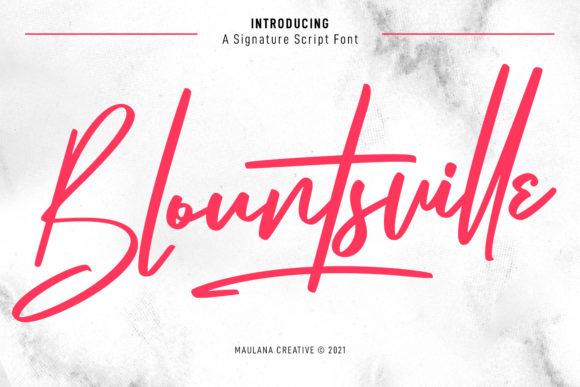
Blountsville Script Font Review for Designers
When I opened a blank brand board for a local artisanal bakery refresh, the initial sans serif options felt too cold and corporate. The client wanted warmth, elegance, and a touch of old-world charm without looking dated. That is when I pulled up Blountsville Script, a luxurious and timeless handwritten font that immediately changed the trajectory of the project. As a designer who tests dozens of Fonts weekly, I look for typefaces that do more than just spell words; they need to convey mood. This Script Handwritten style offered exactly that unique and beautiful touch, transforming simple text into an eye-catching visual asset.
Creating Eye-Catching Logos with Blountsville Script
The primary test for any display typeface is its performance in logo design. I started by typing out the bakery’s name using Blountsville Script. The result was instant. Unlike many digital scripts that suffer from repetitive letterforms, this font ensures every letter has a unique and beautiful touch. This variation is critical for logo work because it prevents the brand mark from looking like it was generated by a basic text tool. The strokes are fluid yet controlled, offering a balance between casual handwriting and refined calligraphy.
In my draft, I used the font as the primary logotype. It stood out boldly against the minimalist background. For designers working on branding projects, this font is the best choice for creating eye catching logos that feel personal and high-end. I noticed that the ligatures connected smoothly, which is often a pain point in lower-quality script fonts. If you are building a brand identity that relies on trust and artisanal quality, this typeface provides a strong foundation. It does not scream for attention but rather invites the viewer to look closer, which is a powerful trait in modern typography.
Elevating Branding and Packaging with Timeless Handwritten Style
After finalizing the logo concept, I moved to packaging mockups. This is where Blountsville Script truly shines as a versatile tool in a designer’s arsenal. I applied the font to label designs for sourdough bread bags and custom sticker seals. The luxurious and timeless nature of the font elevated the perceived value of the products instantly. When customers pick up a product, the typography signals quality before they even read the ingredients.
Using Script Handwritten styles on packaging requires careful attention to scale. I found that Blountsville Script remained legible even at smaller sizes, provided there was enough contrast with the background. It worked beautifully on kraft paper textures, enhancing the rustic yet premium vibe of the brand. For entrepreneurs and small business owners, this font can turn generic packaging into a memorable unboxing experience. It is not just about aesthetics; it is about creating a cohesive brand story that extends from the storefront to the customer’s home.
Designing Impactful Quotes and Social Media Graphics
Beyond static branding, I tested the font in a social media layout for the bakery’s Instagram feed. Content creators and marketers know that scroll-stopping graphics often rely on strong typography. I used Blountsville Script to highlight customer testimonials and short inspirational quotes. The font’s natural flow made the text feel like a personal note rather than a corporate announcement. This approach increased engagement because it felt authentic and relatable.
Every letter has a unique and beautiful touch, which will help your social media posts stand out in a crowded feed. I paired the script with a clean, geometric sans serif for the body text to maintain readability. This combination created a clear visual hierarchy, allowing the Script Handwritten elements to serve as decorative accents while the sans serif handled the informational load. For bloggers and content creators, this font is an excellent resource for creating quote cards, Pinterest pins, and header images that align with a sophisticated aesthetic.
Practical Pairing Advice and Readability Considerations
While Blountsville Script is a powerful tool, it is not a one-size-fits-all solution. As an experienced designer, I always caution against using elaborate scripts for long body text or small print details. This font is best utilized as a display font for headlines, logos, and short phrases. For website headers or business cards, it commands attention, but it should be balanced with simpler Fonts for supporting information.
I recommend pairing Blountsville Script with a neutral sans serif or a classic serif font. The contrast between the organic curves of the script and the structured lines of a sans serif creates a professional and modern look. Avoid pairing it with other decorative fonts, as this can lead to visual clutter. In my project, I chose a light weight sans serif to complement the script’s elegance without competing for attention. This strategy ensures that the brand identity remains clean and accessible across all platforms, from mobile screens to printed flyers.
Licensing and Final Implementation Tips for Designers
Before delivering final assets to any client, it is crucial to review the licensing terms for Blountsville Script. Commercial use requirements vary, so ensure you have the appropriate license for webfonts, print-on-demand products, or large-scale branding campaigns. Many designers overlook this step, leading to legal issues down the line. Always check if the license covers embedding the font in websites or using it on merchandise.
Additionally, test the font in various environments. I exported the designs in both RGB and CMYK color modes to ensure the fine details of the script remained sharp. On screen, the luxurious and timeless handwritten font looked crisp, but I also printed a proof to check how the thinner strokes held up on matte paper. These practical steps ensure that the final output matches the digital preview. For creative studios and freelancers, adding Blountsville Script to your toolkit offers a reliable way to deliver high-end, eye-catching results for clients who value distinctiveness and style.